
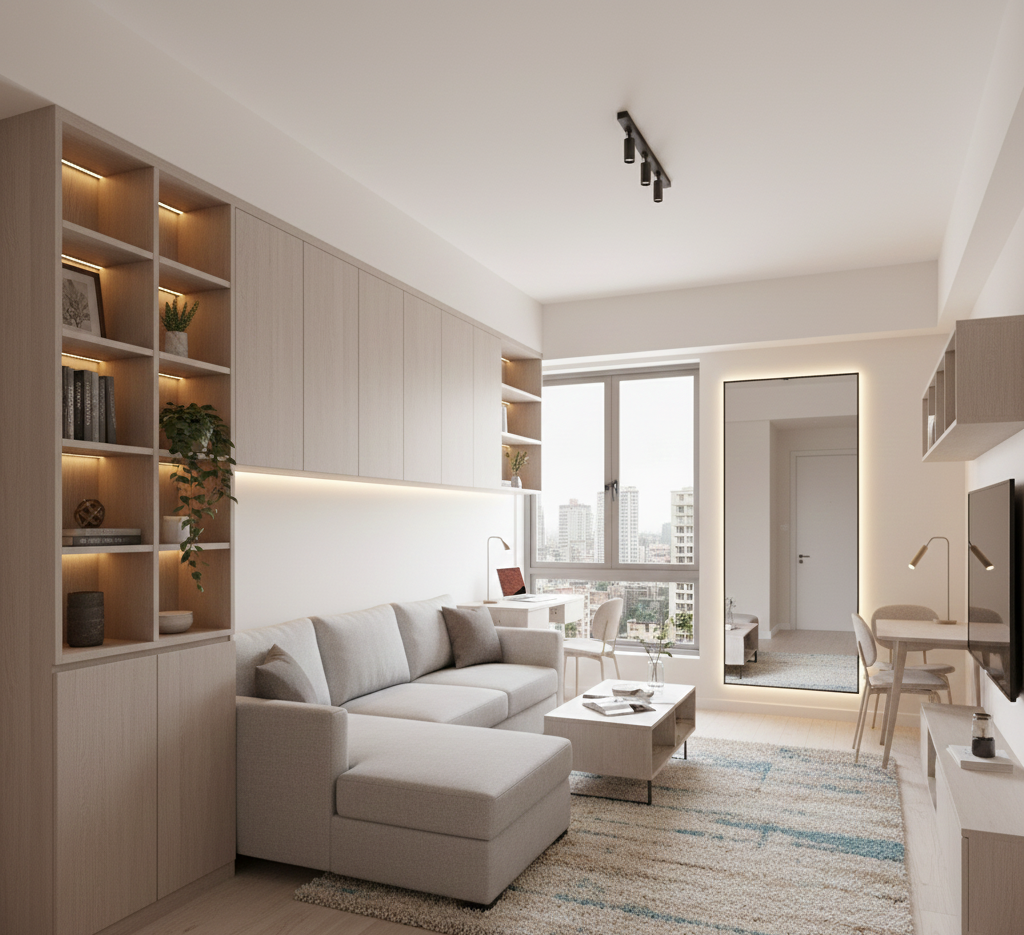
Dhaka apartments often present a beautiful challenge: how to fit your dreams into a limited footprint. At Kure Ghor Interior, we specialize in maximizing every square foot to ensure your space is not just beautiful, but highly functional and comfortable. We believe that with smart design, even the coziest apartment can feel spacious and luxurious. Here are five of our most effective design hacks to help you live large in a small space.
First, embrace the power of verticality. Instead of wide, sprawling furniture that eats up floor area, look for tall, slender pieces. Utilizing floor-to-ceiling storage, mounting floating shelves, and opting for built-in cabinets draws the eye upward, immediately making the ceiling feel higher and the room larger. This strategy saves valuable floor space while providing ample storage for your essentials.
Second, invest in multi-functional furniture. This is the cornerstone of efficient small-space design. Think beyond single-purpose items: consider a sofa that converts into a comfortable guest bed, an ottoman with hidden storage for blankets, or a console table behind the sofa that can double as a compact work desk. Every piece should earn its spot by serving at least two purposes.
Third, use light colors and mirrors to manipulate light and perception. Light, neutral paint palettes, like soft grays and whites, reflect available light, creating a bright and open atmosphere. Strategically placed large mirrors further enhance this effect. A mirror placed opposite a window, for instance, not only reflects light but also mimics the depth of a window, tricking the eye into perceiving a much larger room.
Fourth, integrate invisible storage solutions. Clutter is the enemy of small spaces, and the best way to fight it is by making storage disappear. Custom built-in storage, such as drawers integrated into staircases or window seats with lift-up lids, keeps your belongings neatly tucked away. This maintains the clean, minimalist look essential for a peaceful environment.
Finally, define separate zones without using solid walls. In open-plan living common in Dhaka, you need to differentiate areas without losing the flow. Achieve this by using different rugs to visually anchor the living versus dining areas, employing specific lighting fixtures (a chandelier over the dining table, a floor lamp in the lounge), or using low-profile room dividers like sleek shelving units. These techniques create structure while maintaining a unified and airy feel.